
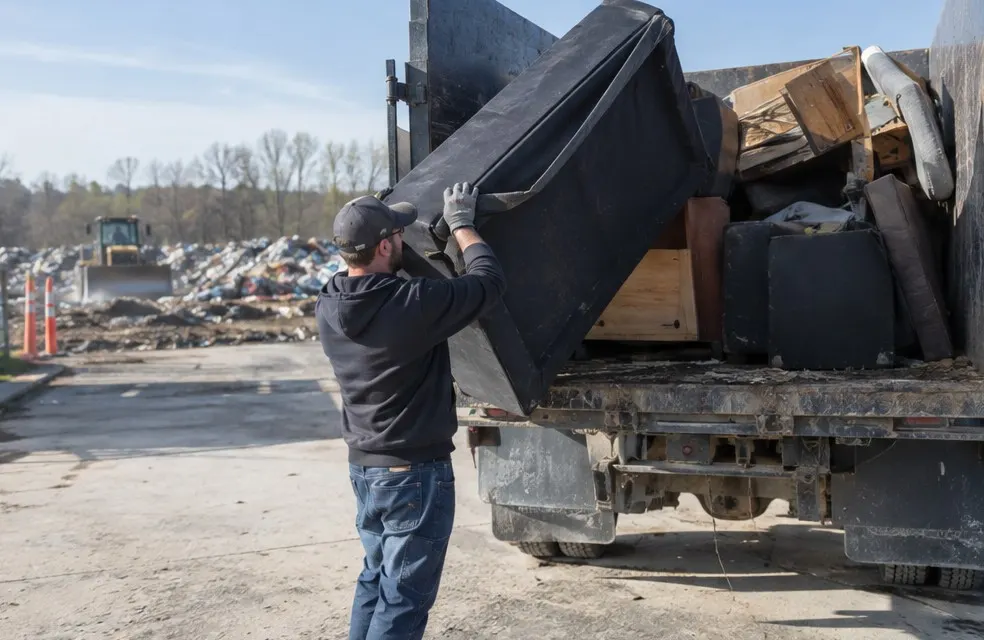
Dump fees are the cost that surprises new junk removal owners most. A load that looked great at the curb can lose money on the scale. Here is how disposal costs work and how to build them into your prices so they never eat your profit.
How dumps charge
Most landfills and transfer stations charge by weight, per ton, with a minimum charge per trip. Some smaller sites charge by the cubic yard or by the vehicle. Across the US, tipping fees for household waste often fall between $40 and $90 per ton, with higher prices in the Northeast and on the West Coast. Minimums are usually $25 to $60 per visit.
Call every site within 20 miles and write down:
- Price per ton and the minimum
- Hours (some close at 3 p.m. or on Sundays)
- Item fees: mattresses, tires, appliances, electronics
- Whether they take yard waste, clean concrete, metal or wood separately, and for less
- Whether you need a commercial account or a hauler permit
Why weight matters more than size
Bulky junk is light. A full truck of furniture and boxes often weighs 1,500 to 3,000 pounds, so it costs $40 to $130 to dump. Heavy debris is a different story:
- Shingles: about 2 to 3 tons for a modest roof tear off
- Concrete and brick: about 1.5 to 2 tons per cubic yard
- Dirt and sod: about 1 to 1.5 tons per cubic yard
- Tile and plaster: heavy, and usually mixed with wood and drywall
A full truck of concrete could weigh more than your truck can legally carry and cost $300 or more to dump. That is why heavy debris needs its own price.
Item fees to plan for
Many counties charge extra for items that need special handling. Common examples:
- Mattresses and box springs: $10 to $35 each. Some states have recycling programs that take them for free or less
- Tires: $3 to $15 each, more for truck tires
- Refrigerators, freezers and AC units: $15 to $50 for refrigerant recovery, unless you take them to a certified recycler
- TVs and computer monitors: $10 to $30 each in many places, free at some e-waste drop offs
- Paint, chemicals, propane tanks and batteries: often not accepted from haulers at all. Decide whether you take them, and say so on your site
Turn these into add-ons on your price list. A customer who sees "mattress disposal $45" on your site does not argue about it at the curb.
Three ways to price disposal in
1. Built into the load price. Your load prices assume a normal weight, and you add item fees for mattresses, tires and appliances. Simple and what most customers expect. Works for household junk.
2. A weight allowance per load. For example: a full load includes 2,000 pounds, and every extra 500 pounds is $35. Fair for jobs that mix furniture with some debris. Explain it before you load.
3. A separate heavy debris price. Concrete, dirt, shingles and tile get their own job type, priced by the cubic yard or capped at a half load, because you cannot fill the truck with them anyway. Many owners set heavy debris at $100 to $150 per cubic yard.
Cut your dump bill before you get there
Every item that does not go on the scale is money you keep:
- Scrap metal. Appliances (once the refrigerant is handled), water heaters, metal bed frames, grills and bikes go to a scrap yard, which pays you a little instead of charging you. Keep a separate pile on the trailer
- Donation. Good furniture, working appliances and boxed household goods go to thrift stores and charities. Many take pickups at the door. Customers love hearing their dresser went to a family, and it is worth saying on your site
- Yard waste and clean wood. Often cheaper, or free, at a separate compost or mulch site
- Clean concrete. Some recyclers take it for much less than the landfill
A good sorting habit can cut your disposal cost per job by a third.
Track it for a month
For every job, write down the load size, the weight on the ticket and what you paid. After 30 jobs you will know what a half load really costs you to dump. Most owners find their average is lower than they feared on household jobs and much higher than they guessed on renovation jobs. Price each kind accordingly.
Show the rules on your site
A short "What we take, and what costs extra" section on your website saves dozens of phone calls. List the item fees, say what you do not take, and explain that heavy material is priced differently. With the JunkPilot estimate calculator, each item fee becomes an add-on the customer checks before they see the price. For the full pricing method read how much to charge for junk removal.
Frequently asked questions
How much does the dump charge per ton?
Many US landfills and transfer stations charge $40 to $90 per ton for household waste, with a minimum of $25 to $60 per visit. Call your local sites for their current rates.
Should I charge customers a separate dump fee?
Most companies build normal disposal into the load price and add separate fees only for mattresses, tires, appliances and heavy debris. Customers prefer one clear number.